· The Landup Partners team
How to Buy Vacant Land in the USA: A First-Time Buyer’s Guide
Buying vacant land can be an exciting way to build a future home, create a recreational property, or make a long-term real estate investment.
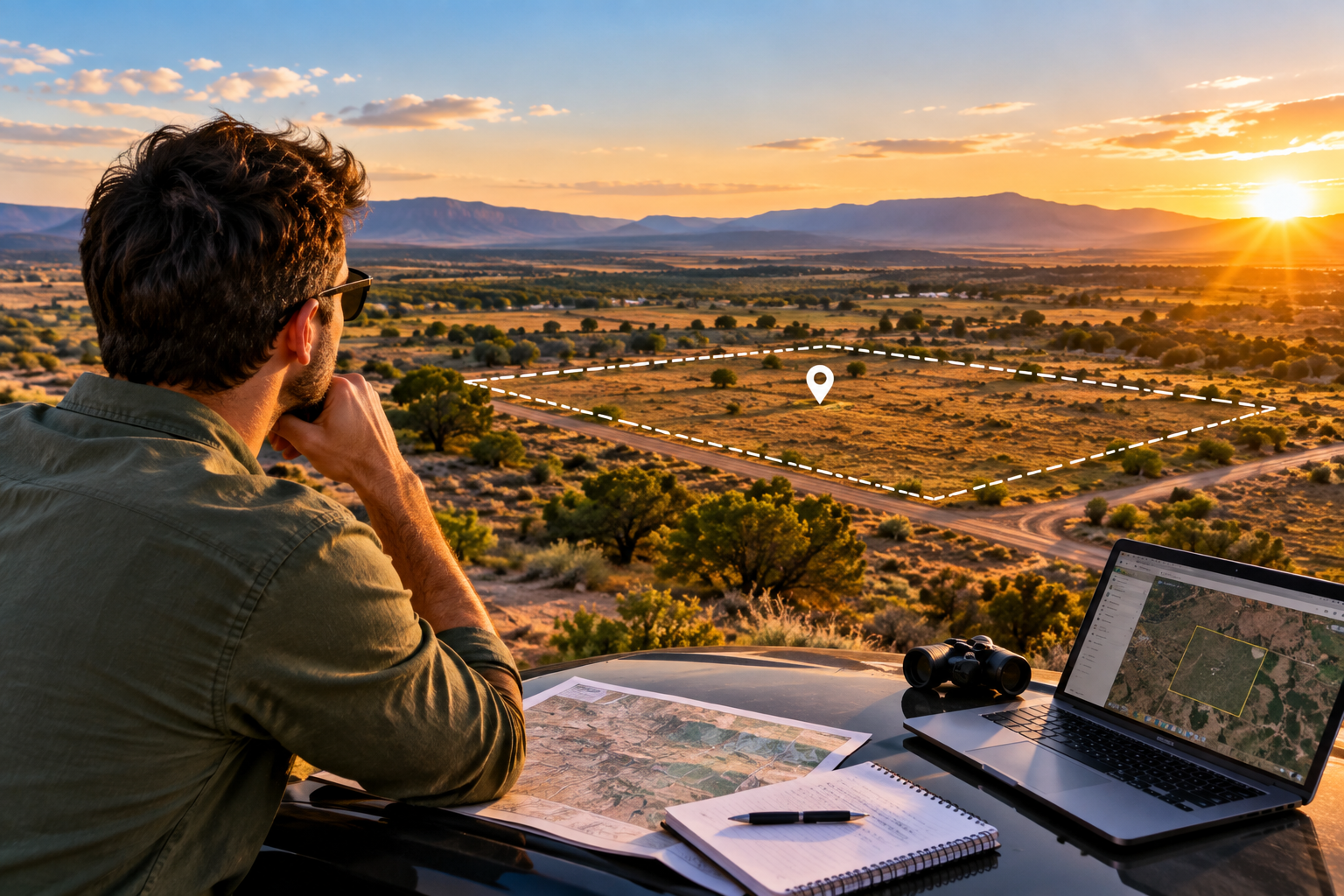
Buying raw land is different from buying a house. There may be no building, utilities, driveway, or established address. What looks like an inexpensive piece of land can come with restrictions, development costs, or access issues that aren't obvious from a listing.
Before you buy vacant land in the USA, take the time to understand what you are actual
1. Decide What You Want to Do With the Land
Start with your end goal.
Are you looking for land to:
- Build a home
- Create a weekend or recreational property
- Hold as a long-term investment
- Build an off-grid property
- Start a small homestead
- Purchase land for future development
Your intended use will help determine the right location, acreage, zoning and property characteristics.
A parcel that works well for an investment may not be suitable for building a home—and vice versa.
2. Research the Location
Location matters even when you're buying raw land.
Research the surrounding area, nearby towns, roads, services and future development.
Look at:
- Population and growth
- Nearby communities
- Major roads and highways
- Schools and services
- Employment centers
- Nearby development
- Local property taxes
For investment purposes, understanding the broader market can be just as important as understanding the parcel itself.
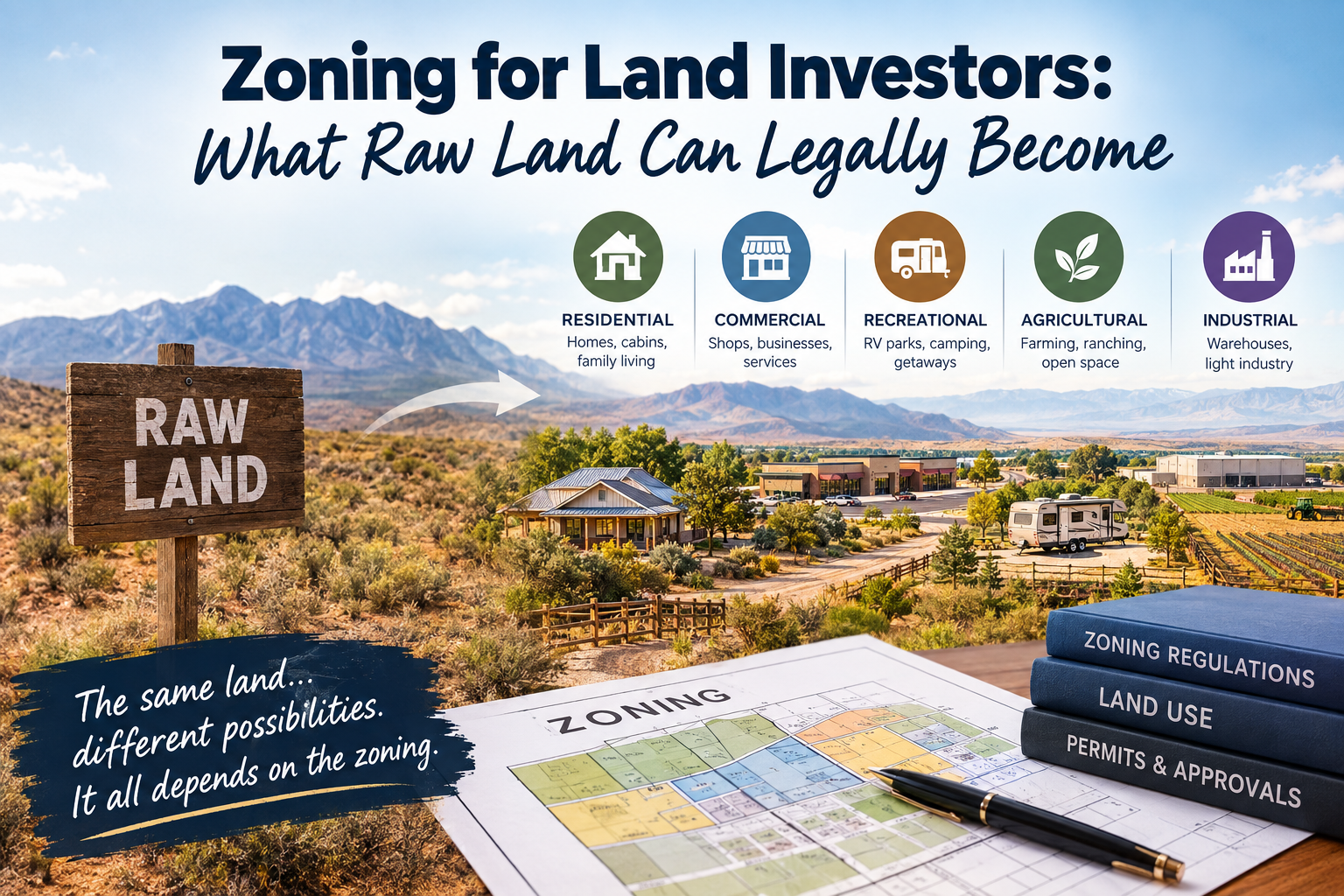
3. Check Zoning and Land-Use Regulations
One of the most important steps when buying vacant land is determining what you are legally allowed to do with it.
Zoning and land-use regulations vary by county and municipality.
Before purchasing, check whether the property allows your intended use and whether there are requirements related to:
- Residential construction
- Minimum building size
- Manufactured or mobile homes
- RV use
- Camping
- Agricultural activities
- Commercial use
- Subdivision
Also look for HOA rules, deed restrictions, conservation requirements and other limitations.
Never assume that vacant land is automatically buildable.
4. Confirm Legal and Physical Access
A road visible on a map does not always mean you have legal access to the property.
There are two separate questions:
Does the property have legal access?
Can you physically reach the property?
Review recorded easements, road rights and property records. If access is unclear, investigate the issue before closing.
An inexpensive parcel with difficult access can become expensive or impractical to develop.
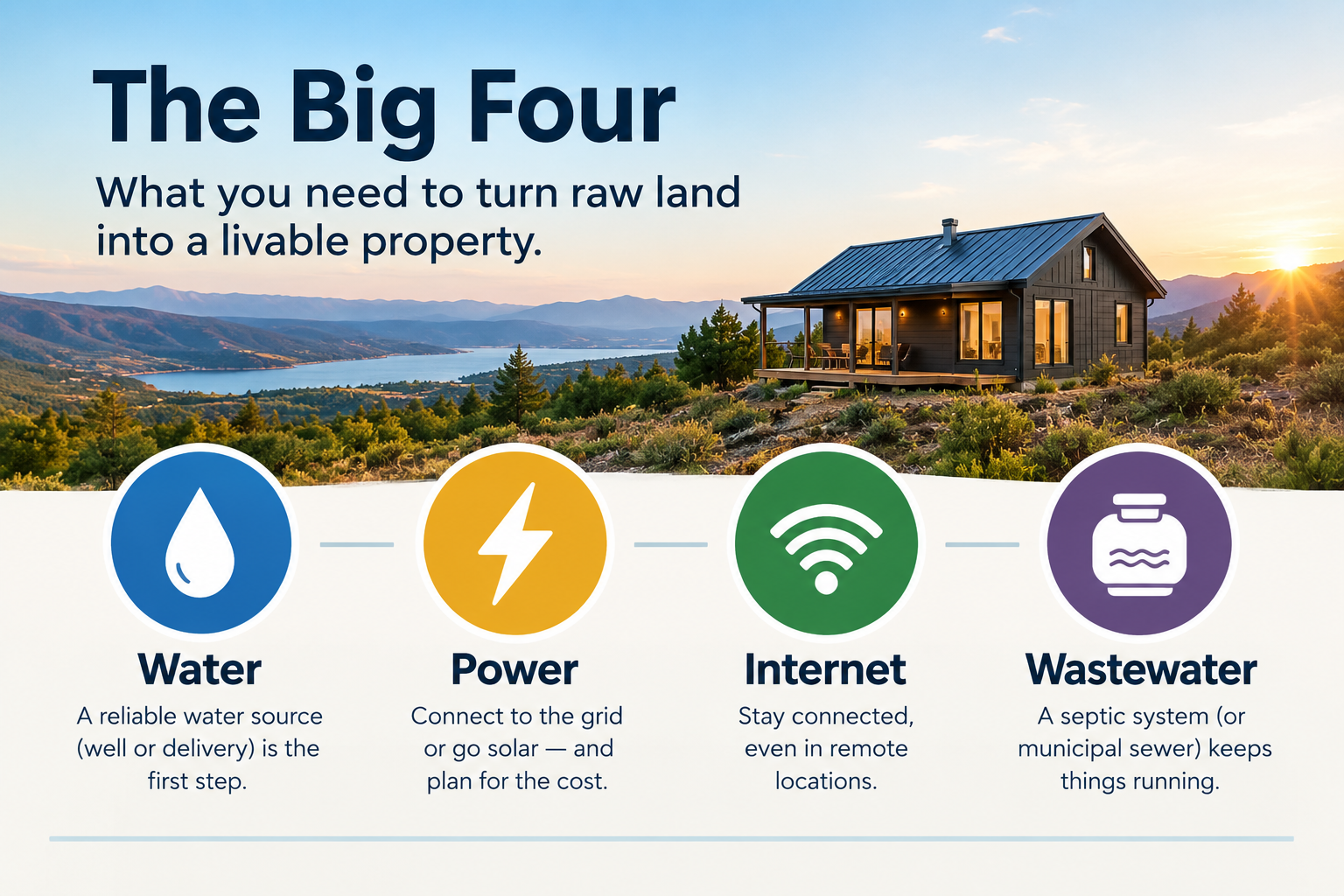
5. Investigate Water, Power and Septic
Utilities are one of the biggest differences between buying a house and buying raw land.
Depending on the location, you may need to arrange your own:
- Water
Determine whether public water is available or whether a private well, water hauling or another solution is required.
Electricity
Find out whether power is already available at the property or how far the nearest connection is.
Septic
If there is no sewer service, investigate whether a septic system is permitted and whether the soil and property layout meet local requirements.
Internet
Rural properties may have fewer connectivity options. Check cellular coverage, fixed wireless, satellite internet or other available services.
Understanding these costs before buying can prevent expensive surprises later.
6. Understand the Land and Terrain
A property can look completely different in person than it does in an online listing.
If possible, visit the property and evaluate:
- Terrain and slope
- Drainage
- Flood risk
- Vegetation
- Soil conditions
- Road conditions
- Neighboring properties
- Existing structures
- Signs of environmental concerns
For certain properties, a professional survey, environmental assessment or other specialized inspection may be appropriate.
7. Perform a Title and Ownership Check
Before purchasing vacant land, make sure you understand who owns the property and whether there are recorded issues affecting it.
A title search may reveal:
- Liens
- Easements
- Ownership issues
- Deed restrictions
- Other recorded claims
Working with a reputable title company can help identify potential problems before the transaction is completed.
8. Calculate the Real Cost of the Property
The purchase price is only one part of the equation.
Depending on the property and your plans, you may need to account for:
- Closing costs
- Property taxes
- Survey costs
- Title services
- Road improvements
- Well or water costs
- Septic installation
- Power installation
- Permits
- Construction and site preparation
When evaluating land, think about the total cost of ownership and development, not just the advertised price.
9. Review the Property Taxes
Property taxes on vacant land are often relatively low, but they vary considerably by location.
Check the current tax amount and determine whether there are:
- Delinquent taxes
- Special assessments
- Other property-related charges
Taxes should be part of your long-term ownership calculation.
10. Don't Rush the Purchase
Buying land is a long-term decision.
A property may look attractive because of its price, acreage or scenery, but those factors alone don't tell you whether it is the right property.
Before closing, make sure you understand:
- Zoning → Access → Utilities → Taxes → Title → Terrain → Total Cost
If something is unclear, investigate it before you purchase.
Final Thoughts
Buying vacant land in the USA can provide flexibility and long-term opportunity, but successful land ownership starts with proper due diligence.
The goal isn't simply to find cheap land.
The goal is to find the right land for your plans, your budget and your intended use.
Take your time, verify the important details, and make your decision based on facts rather than assumptions.
At LandUp Partners, we believe that buying land should be straightforward and transparent. That's why understanding the property before you buy is one of the most important steps in the entire process.