· The Landup Partners team
Zoning for Land Investors: What Raw Land Can Legally Become
Zoning is one of the most important factors in a vacant land deal. It decides what can be built on a parcel, who will want to buy it, and what it's worth. This guide explains how zoning is set, where to find a parcel's zoning, and how each common zoning type can add value or hide risk.
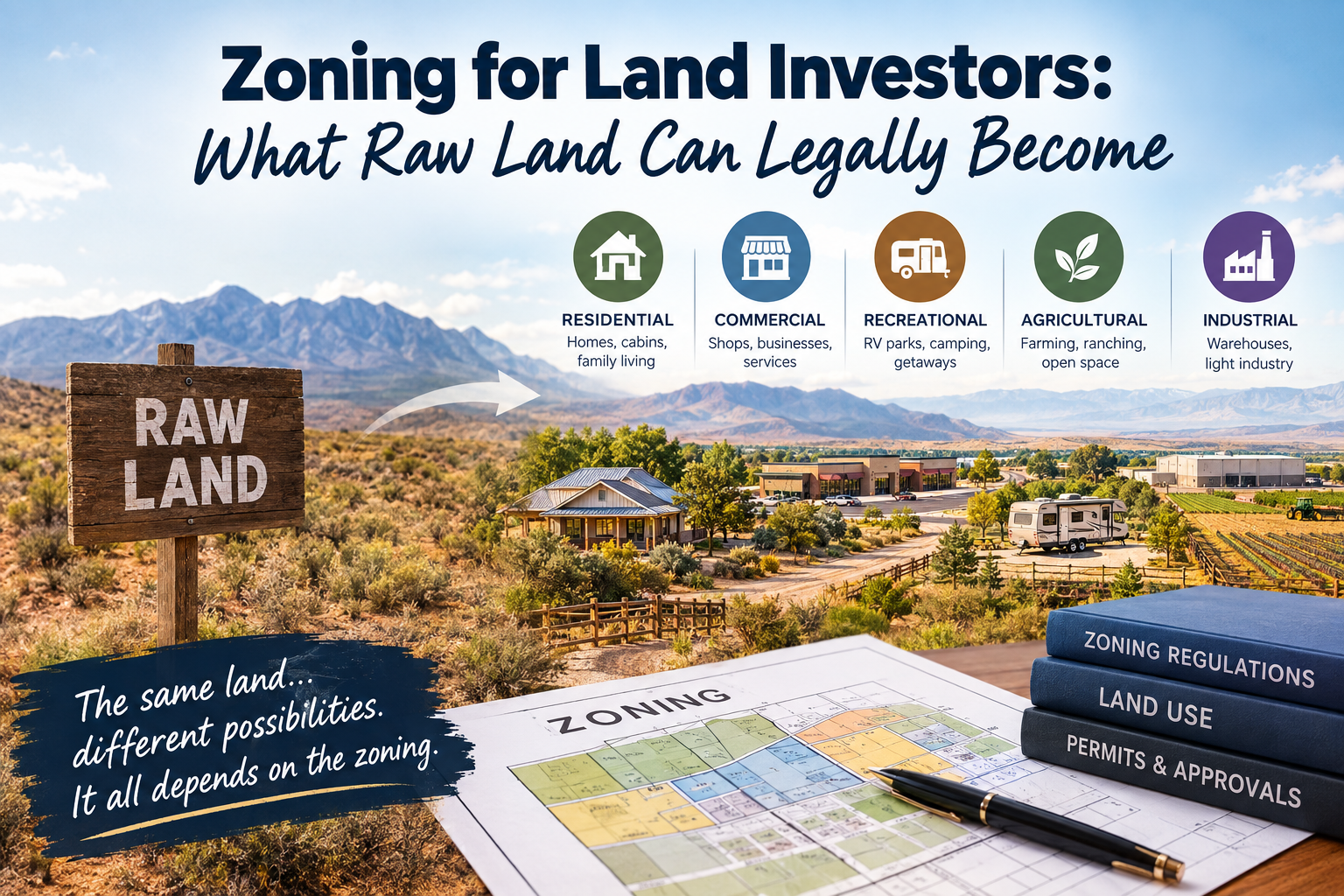
As land investors, we don't build. We buy raw land and resell it. So we read zoning with one question: what can a future buyer legally build here? The answer sets the parcel's value and decides how easily it will sell.
Zoning codes vary by jurisdiction, and some rural counties have little or no zoning. Always check the local ordinance.
How Zoning Is Determined?
State law gives zoning power to local governments. Inside city limits, the city sets zoning. Outside city limits, the county does, and in some states the township. Each jurisdiction has two key documents:
- Comprehensive Plan:
the long-term vision for growth. It isn't binding, but it hints at future zoning changes.
Zoning Ordinance:
the binding rules. It has two parts: a zoning map showing each parcel's district, and the ordinance text listing what each district allows.
To change what's allowed on a parcel, an owner can apply for a rezoning, a variance or a conditional use permit. Each goes through the planning commission and public hearings, and approval is never guaranteed.
Where to Find a Parcel's Zoning?
Get the parcel number (APN) from the county assessor.
Confirm the jurisdiction:
is the parcel inside city limits or in the unincorporated county?
Check the county or city GIS map for the zoning code.
Read the ordinance for that district on the county or city website, or on Municode, American Legal or eCode360.
Check overlays and restrictions:
FEMA flood maps, wetlands maps, and deed restrictions recorded with the county recorder.
Get it in writing: request a Zoning Verification Letter from the planning department.
Common mistakes:
the assessor's "land use code" is for taxes and is not zoning. GIS maps and third-party tools can be outdated. Always confirm with the local planning department.
Residential Land
Single-Family (R-1): Generally allows one detached home per lot, with setbacks and size limits. Watch for: minimum home sizes, which can come from zoning or from deed restrictions. A 1,500 sq ft minimum rules out buyers who want a cabin or tiny home.
Multi-Family (R-2, R-3+): Allows duplexes, townhomes or apartments. Developers value this land per unit. On a 2-acre parcel zoned for 15 units per acre, the maximum is 30 units. Parking, setbacks, roads and utilities often reduce the real number.
Commercial and Industrial Land
Commercial (C-1, C-2, CH): Allows retail, offices and service businesses. Value depends on location. A highway-exit lot can draw gas stations and restaurants. A commercial lot on a remote dirt road with no utilities may only bring higher holding costs.
Industrial (M-1, M-2): Allows warehousing, manufacturing and distribution. Light industrial land is in demand for RV and boat storage and contractor yards. Confirm permit, paving and stormwater requirements, and check the site's environmental history.
Agricultural and Resource Land
Agricultural (A-1 / AG): Protects farmland and usually allows one home. Watch for: minimum lot size. If the minimum is 20 acres, a 40-acre tract can't be split into four 10-acre lots without a rezoning or variance. Splitting land or changing its use can also trigger rollback taxes on land taxed at agricultural rates.
Forestry and Conservation (F / CON): Limits building and land clearing in sensitive areas. Some counties allow only a small share of vegetation to be cleared. Check for conservation easements, wetlands and floodplains too.
Mixed-Use and PUDs
Mixed-use zoning allows residential and commercial uses on the same parcel. A Planned Unit Development (PUD) has custom rules pre-approved by the local government. These parcels can appeal to developers because part of the approval work is already done. Check expiration dates, obligations tied to the land, and what permits are still required.
The Bottom Line
Zoning sets the ceiling on a parcel's value. Don't buy land for what it looks like it could become. Buy it for what the law allows. Before closing, check:
- The zoning district's rules
- Overlay districts, such as floodplain or environmental zones
- Subdivision rules, if you plan to split the land
- Deed restrictions
- Access, utilities and septic
- A written zoning verification letter from the county